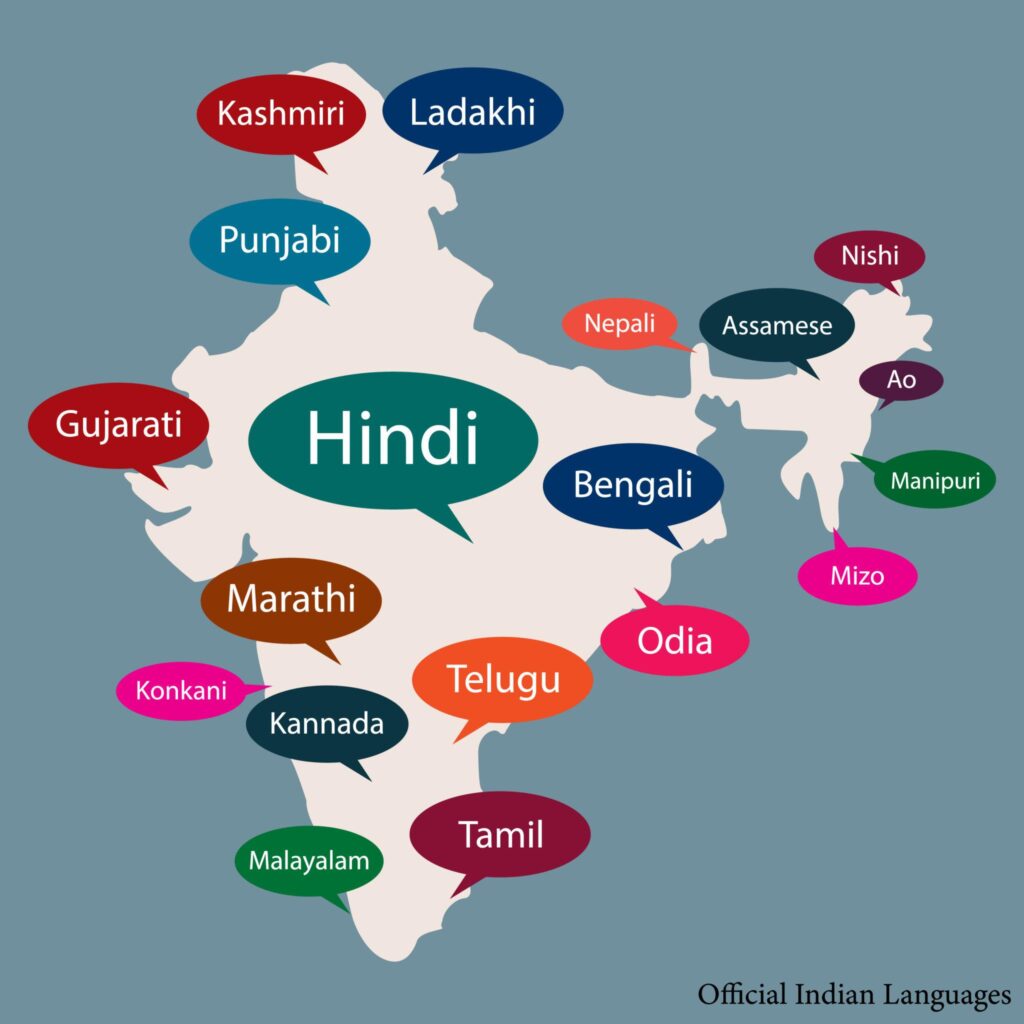
India is one of the most linguistically diverse countries in the world. The Indian Constitution recognizes multiple languages, and each state has its own official or commonly spoken languages.
This page provides a clear, state-wise list of languages spoken in India, useful for students, researchers, and general reference.
How Many Languages Are Spoken in India?
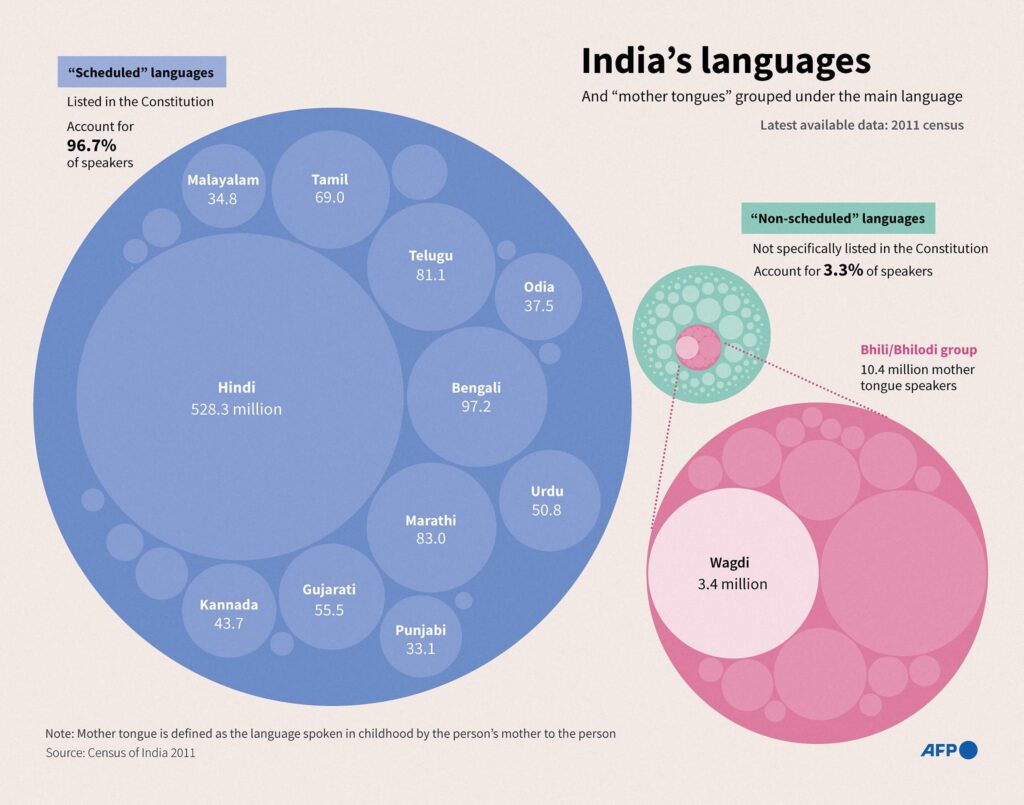
- India has hundreds of languages and dialects
- The Constitution of India recognizes 22 official languages under the Eighth Schedule
- States are free to adopt one or more official languages for administration
Official Languages of India
At the national level:
- Hindi is the official language of the Union
- English is used for official and administrative purposes
Languages of India – State-wise List
Northern India
- Uttar Pradesh: Hindi, Urdu
- Uttarakhand: Hindi, Sanskrit
- Himachal Pradesh: Hindi
- Punjab: Punjabi
- Haryana: Hindi, Punjabi
- Jammu & Kashmir: Urdu, Kashmiri
- Ladakh: Hindi, English
Western India
- Rajasthan: Hindi
- Gujarat: Gujarati
- Maharashtra: Marathi
- Goa: Konkani, Marathi
Eastern India
- West Bengal: Bengali
- Odisha: Odia
- Bihar: Hindi, Urdu
- Jharkhand: Hindi
- Assam: Assamese
Central India
- Madhya Pradesh: Hindi
- Chhattisgarh: Hindi
Southern India
- Andhra Pradesh: Telugu
- Telangana: Telugu
- Tamil Nadu: Tamil
- Karnataka: Kannada
- Kerala: Malayalam
North-Eastern India
- Arunachal Pradesh: English
- Nagaland: English
- Manipur: Meitei (Manipuri)
- Mizoram: Mizo
- Meghalaya: English
- Tripura: Bengali, Kokborok
- Sikkim: Nepali
Union Territories
- Delhi: Hindi, English
- Chandigarh: English, Punjabi
- Puducherry: Tamil, Telugu, Malayalam, English
- Andaman & Nicobar Islands: Hindi, English
- Dadra & Nagar Haveli and Daman & Diu: Gujarati
- Lakshadweep: Malayalam
Difference Between Official and Regional Languages
- Official Language: Used for government and administration
- Regional Language: Commonly spoken by local people
A state may have more than one official language.
Why India Has So Many Languages
India’s language diversity is influenced by:
- History and migration
- Geography
- Culture and traditions
This diversity is an important part of India’s identity.
Why This Information Is Useful
- Educational reference
- Competitive exam preparation
- General knowledge
- Cultural understanding
Related India Information